Showing posts with label russia. Show all posts

2008-11-25

Russia says U.S. mercenaries, others fought for Georgia

Georgian soldiers evacuate their base after a Russian bombardment in Gori, Reuters – …

ST PETERSBURG, Russia (Reuters) – Russia has evidence that citizens from NATO member states including the United States and Turkey fought for Georgia in the five-day August war, Russia's top investigator said on Monday.

A senior security official in Tbilisi dismissed the statement and said by law only Georgian nationals could serve in the country's armed forces.

Asked to list the nationalities of the foreign fighters it believes were involved, Alexander Bastrykin, head of the Prosecutor-General's investigative committee said: "America, the Czech Republic, Chechnya, the Baltic States, Ukraine and Turkey."

"It was a fairly small number of people. They mainly fulfilled support roles," Bastrykin told reporters in Russia's second city of St Petersburg.

He said some had conducted training for the Georgian armed forces. "There were also two snipers ... one from Ukraine and I believe a Latvian woman," he said.

He said he considered the presence of foreign fighters a criminal offence and said he would bring it up at a meeting with representatives of Interpol.

Russia launched a massive counter-offensive on land and sea in August after Georgian forces tried to retake South Ossetia, a Moscow-backed separatist region that rejects Tbilisi's rule.

Western states condemned Russia's actions as disproportionate, but Moscow said it acted to save the lives of innocent civilians and accused the West of fomenting the conflict by arming Georgia.

Responding to Bastrykin's allegation, Kakha Lomaia, the Secretary of Georgia's National Security Council, told Reuters: "It's really difficult to make comments on such absurd statements."

"There are only Georgian citizens in the Georgian army as it's a legal requirement."

"The statement that almost half of the world was fighting in our army in August is just a fantasy of those in the Russian leadership who would like to justify killings of the peaceful population," he said.

(Reporting by Denis Dyomkin in St Petersburg, Russia and Margarita Antidze in Tbilisi; writing by Simon Shuster; editing by Matthew Jones)

RUSSIAN ANALYST PREDICTS DECLINE AND BREAKUP OF USA

Tue Nov 25 2008 09:04:22 ET

A leading Russian political analyst has said the economic turmoil in the United States has confirmed his long-held view that the country is heading for collapse, and will divide into separate parts.

Professor Igor Panarin said in an interview with the respected daily IZVESTIA published on Monday: "The dollar is not secured by anything. The country's foreign debt has grown like an avalanche, even though in the early 1980s there was no debt. By 1998, when I first made my prediction, it had exceeded $2 trillion. Now it is more than 11 trillion. This is a pyramid that can only collapse."

The paper said Panarin's dire predictions for the U.S. economy, initially made at an international conference in Australia 10 years ago at a time when the economy appeared strong, have been given more credence by this year's events.

When asked when the U.S. economy would collapse, Panarin said: "It is already collapsing. Due to the financial crisis, three of the largest and oldest five banks on Wall Street have already ceased to exist, and two are barely surviving. Their losses are the biggest in history. Now what we will see is a change in the regulatory system on a global financial scale: America will no longer be the world's financial regulator."

When asked who would replace the U.S. in regulating world markets, he said: "Two countries could assume this role: China, with its vast reserves, and Russia, which could play the role of a regulator in Eurasia."

Asked why he expected the U.S. to break up into separate parts, he said: "A whole range of reasons. Firstly, the financial problems in the U.S. will get worse. Millions of citizens there have lost their savings. Prices and unemployment are on the rise. General Motors and Ford are on the verge of collapse, and this means that whole cities will be left without work. Governors are already insistently demanding money from the federal center. Dissatisfaction is growing, and at the moment it is only being held back by the elections and the hope that Obama can work miracles. But by spring, it will be clear that there are no miracles."

He also cited the "vulnerable political setup", "lack of unified national laws", and "divisions among the elite, which have become clear in these crisis conditions."

He predicted that the U.S. will break up into six parts - the Pacific coast, with its growing Chinese population; the South, with its Hispanics; Texas, where independence movements are on the rise; the Atlantic coast, with its distinct and separate mentality; five of the poorer central states with their large Native American populations; and the northern states, where the influence from Canada is strong.

He even suggested that "we could claim Alaska - it was only granted on lease, after all." Panarin, 60, is a professor at the Diplomatic Academy of the Russian Ministry of Foreign Affairs, and has authored several books on information warfare.

Developing...

2008-11-24

How Georgia prepared for the invasion

KP receives top-secret staff records from the Fourth Georgian Rifle Brigade

Sergey Zelentsov. Viktor Baranets — 21.11.2008

How Georgia prepared for the invasion. Part 2

The war in the South Caucasus in August remains a source of rumors and speculations around the world. The West almost unanimously continues to judge Russia as the aggressor in the conflict, which unjustly "occupied a small, defenseless Georgia." They also persist with their assertions that Russia began the war, and the Russian army prepared military operations long before the outbreak of the war in South Ossetia.
Is this how everything really happened? KP recently received top-secret documents that shed light on the actual state of affairs long before Georgian missiles fell on the rooftops of a sleeping Tskhinvali. These staff records are from the Fourth Georgian Rifle Brigade, which was the main striking force during the conflict. Pay close attention to the dates within, as they reveal the true essence of the situation. We turned to expert Vladimir Artyukhov, a senior officer at a department of the General Staff of Russia's Armed Forces, for commentary.
Secret plots...
Segments of the document, translated from Georgian
Sign over:
Chief of staff
Signature 7.08.08
Top Secret
Cop No.
Staff of the Fourth Rifle Brigade
Vaziani
5.15 7 August 2008
Commentary
Based on the "sequence" of the order, it appears to be almost entirely American. U.S. military advisers, who had been stationed at the army base in Vaziani, really whipped their Georgian "students" into shape. But that's not the most important thing in this issue. What's most important is where it says: "5.15. 7 August." This proves the Georgians were already ready for war a day before combat began.
And reading further on...
Preliminary Order No. 02
Map No. 1:50000, K-38-64-A, K-38-90-B, K-38-64-В,
K-38-64-G
Publication 1987
Local Time
1. Conditions
Without Change (See Preliminary Order No. 01)
А. Adversary Force
Without Change (See Preliminary Order No. 01)
B. Own Force
Without Change (See Preliminary Order No. 01)
Commentary
This is yet another eloquent fact that refutes the lies that have spread that "Russia prepared for the war earlier." The Georgian special forces clearly say for themselves: "Adversary Force — Without Change." And this was Aug. 7! If the Georgians had registered our convoys advancing, would they have written this? Yet Saakashvili continues to lie that the "Russians secretly occupied South Ossetia even as early as Aug. 5..."
Three days for war...
Task of the high commander
The strategic group had 72 hours to implement military actions in Samachablo (ed. South Ossetia), destroy the adversary forces and restore Georgian jurisdiction in the region.
Commentary
You'd agree that if the Georgian generals had any accounts of Russian units being in South Ossetia at the time, they wouldn't have set aside a mere 72 hours to solve the conflict. Even the dumbest Georgian general wouldn't risk such adventurism. They clearly thought our peacekeepers and South Ossetian armed units would be the only forces applying resistance. This is why such a small period of time was set aside for the operations, and you can see this for yourselves in the document.
American devices
Plot of the high commander:
- Quickly implement military actions;
- Decrease risk of destroying civilian population and property;
- Destroy the adversary's force with precision strikes;
- Protect one's own forces.
Commentary
The second point in this section looks a bit odd. It's unclear how these "humane" Georgians intended on lowering the risk of destroying the civilian population and property if they were mercilessly showering Grad missiles on huge areas both in and around Tskhinvali. What precision strikes were they referring to? The Georgian staff jotted this down straight from the U.S. model for staff records. There are no points that say "Protect one's own forces" in Georgian military regulations. This is also an American addition.
Task
Divisions of the Fourth Rifle Brigade were switched to the alert state to support the strategic group at the place of dislocation no later than 11:00, Aug. 7, 2008.
Commentary
Again, "11:00, Aug. 7" is just more evidence that proves the Georgian military machine was launched one day before Saakashvili's troops invaded South Ossetia.
End goals:
- Expose separatist forces in the region;
- Establish a peaceful and secure environment in the region.
Commentary
The term "separatist forces" sounds odd. But it tells us a great deal. Saakashvili's army was afraid of the enemy that would apply resistance. Stress is placed on this idea in other sections of the order, too. The army is speaking out against the "political police," something like a Georgian-style gestapo.

Commander's Critical Information Requirement (CCIR)

(A) Primary Intelligence Requirement (PIR)

1. What are the means/methods/regimes that separatist forces may use to destabilize the security of the region?

2. Where is the immediate confrontation occurring?

3. Who is supporting the separatist forces?

4. Where are the separatist camps and entrenchments?

5. Where is their primary firepower?

6. What is the number of the adversary forces?

7. Where and when will various adversary groups attack our forces?

8. Who are the influential figures within the area of operation?

Commentary

Once upon a time, I had the occasion to hold very similar American documents during the NATO war in Yugoslavia. They were almost identical! This includes the section on "influential figures." This is strictly the American "experience" where military aims are closely connected with politics.

What are they afraid of? The risks...

The danger of separatists mixing with civilian and refugee populations during their movements, which would destabilize the situation at a later point from the rear.

Commentary

As you can see, when the Georgians planned the war themselves. They weren't worried about refugees, but rather "unwanted elements" ending up among their ranks. Cynical morals.

Orders to Support Units:

The brigade support units (tank battalion; artillery division; support battalion and individual squadrons) must enter a state of combat readiness in order to support maneuver elements and prepare to march to the area where the brigade is gathering.

Sq. 0259

Commandeer of the Fourth Rifle Brigade

Signature of Major G. Kalandadze

Commentary

The units enter a state of combat readiness to rapidly transition into military action. This is further evidence about who started the war.

Political Entourage

Top Secret

Exemplar No. 2

Staff of the Fourth Rifle Brigade

Vaziani

1.30 7 August 2008

Preliminary Order No. 01

1. State of Affairs

In the 1990s, the state of affairs in the Samachablo region (ed. South Ossetia) was complicated. The local authorities expelled the Georgian segment of the population with Russia's political assistance. Only Georgians living compactly in the area of Didi-Liakhvi (villages to the north of Tskhinvali) remained in the region. By using political and economic levers, Russia brought peacekeepers into the region, which destabilize the situation and openly support the separatist authorities.

Recently, illegal armed gangs have regularly attacked the Georgian population in the region and opened fire on them using both low- and high-caliber weapons. At the same time, the gangs are continuing to be armed. This increases the level of danger for the Georgian population in the population.

Commentary

Thanks to Russian peacekeepers, a budding war was pacified for more than 10 years in the region. Now Georgia's commandeers have turned everything upside down.

А. Adversary Forces

The Ossetian separatists in the region of Samachablo continue their armed opposition against the civilian population and peacekeeping forces. Their primary tactical techniques are: homemade explosive devices; snipers; homemade missile launchers; 60-82-millimeter mortar launchers; and composite ambushes.

Commentary

And so, it's clear the Fourth Rifle Brigade only saw the Ossetian separatists as their adversaries. Where were the Russian units then? They simply weren't there. So who started the war?

B. Own Forces:

- 41 Rifle Brigade;

- 42 Rifle Brigade;

- 43 Rifle Brigade;

- Armored battalion;

- Artillery division;

- Support battalion;

- Command company;

- Intelligence company;

- Engineering company;

- Radio communication company.

Light Infantry Battalions:

Task: The units must enter a state of combat readiness no later than 11:00 in 2008 (ed. No exact date was given) to depart from the area of the brigade's dislocation and support the strategical group, and conduct actions of stabilization, aggression, and defense.

Artillery Division:

Task: Be prepared to support maneuver units during the operations.

Intelligence Company:

Task: The intelligence company must commence reconnaissance activities in the area of operations from 05.00, Aug. 7, with the aim of studying the locale where the brigade is concentrated.

Commandeer of the Fourth Rifle Brigade

Signature of Major G. Kalandadze

For the review of individual companies

Executed by: G-3 Major Z. Dzhandzhaliya

Tel.: 877-19-39-49

7.08.2008

Commentary

Facts can be interpreted as you like. But documents are irrefutable. And these documents prove what Saakashvili has been denying every step of the way while accusing Russia of starting the war in the Caucasus.

Unfortunately, many politicians simply took his word for the truth. But his word is a lie. The truth is in these orders, which are dated to the hour and minute, and signed by Georgian military personnel.

The truth is that the first shells to fly in the conflict hit civilian homes in Tskhinvali from the Georgian side... The truth is that Saakashvili prepared the war ahead of time... And Russia replied to Georgia's act of provocation and did what it did... But not by choice — and simply because Russia was forced to respond the way that it did.

Читать русскую версию: Как Грузия готовила вторжение

2008-11-20

USA, Russia and “arms race” in Latin America

Print version

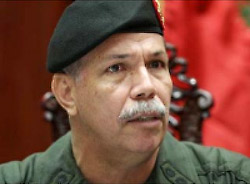
Head of the Bolivarian armed forces department general Jesus Gonzales

Nil Nikandrov

The measures taken by the president of Venezuela Hugo Chavez to modernise the armament of the army, aviation and navy were met in pro-American mass media of the Western hemisphere countries by indignant discharge of propaganda bugaboos that all come down to one thing: “Russia unleashed the arms race in Latin America!”

The word “bugaboo” was heard in the epoch of the “cold war”. According to the dictionary it means “something that induces fear, repulsion; something that is used to scare”. Presently, the “bugaboos” that scare by military and technical cooperation (MTC) of Russia and Venezuela, should basically induce fear to policyforming circles in Latin America. It looks, for example, like this: “Bolivarian regime flexes its muscles with the help of Russia”, “The balance of forces in the subregion is disturbed”, “Aggressive potential of Venezuela has noticeably grown up” and, it goes without saying, “Chavez and Putin contribute to the arms race on the continent”. There is no doubt that after the planned on 26 November visit of D. Medvedev to Venezuela, similar accusations will be brought down at the address of the Russian president. Standard accusations do not even possess a hint to the truth, but do those “planners” in the USA that set going the “cold war” of the XXI century need it?

The growth of anti-Russian propaganda on Latin America has become more noticeable after the power in the USA came to ultra-right forces, political operators of financial capital, leading transnational corporations, military-industrial complex and those untouchable privileged elites, that think the utmost historical destination of the USA is imperialist domination over the world - PAX AMERICANA.

G. Bush-junior administration in 2000 got a carte blanche to set up geopolitical prerequisites for a decisive multi-vector Blitzkrieg. Among the primary tasks are provision of the guaranteed control over the main world reserves of carbohydrates and setting up of preconditions for splitting Russia to several “independent states”, after which there should come the turn of “neutralisation” of China.

Due to grandiosity and cost-based factor in establishing the “new world order” on the Eurasian continent the Bush administration had to deal with Latin America at half-strength, on the “leftover principle”. Wars in Iraq and Afganistan used to make huge breaches in American treasury. The countries to the south from Rio Grande lacked material and financial resources. In the traditional “stick and carrot policy” the latter soothing ingredient was getting more and more scarce, therefore the “stick” has become more noticeable: public scolding by State department of certain presidents, especially in Latin America, for “politically incorrect behaviour”, excessively close contacts with “tyrant” Hugo Chavez, etc. And what could those presidents do, if high officials in the USA admit that they keep Latin America on starvation rations of assistance, whereas the dynamic Venezuelan leader does not spare for his friends in the region either petrodollars or supplies of energy resources at reduced rates? In order to keep Latin American countries on a short leash, Washington brings to their knowledge through various channels the “authentic information” that after defeat of Iraq and Afganistan the USA will seriously take up for all “violators of stability” in Latin America. And first of all the “dictator” Chavez will have to be held responsible for all caused inconveniences!

For eight years of Bush rule the United States suffered three major defeats in Latin America.

Firstly, the attempt to use the “Chilean model” for overthrowing president Chavez has failed. After a 48 hour removal from power by conspirators, he, supported by the masses and loyal military units, regained his chair in the presidential palace Miraflores.

Secondly, Washington failed to bring to the logical end their cunning neo-colonial project of the controlled integration – establishing in Western hemisphere the Free Trade Area of the Americas. It was actually blocked at the Summit of the Americas by Venezuela and MERCOSUR member countries (Mar del Plata, Argentina, November 2005).

Thirdly, the US turned out to be helpless in the struggle against the so called populist regimes of Latin America. Despite demonization of Chavez and his “socialism of the XXI century”, the number of “populists” to the south from Rio Grande is increasing: Evo Morales in Bolivia, Rafael Correa in Ecuador, Daniel Ortega in Nicaragua, to a certain degree Fernando Lugo in Paraguay and Cristina Fernandez in Argentina. The Cuban authorities do not reveal any signs of weakness although Bush and his team in a stately manner adopted the program of “accelerated transition of Cuba to democracy” (on a socialist island the scenarios of “coloured revolutions” do not work).

The “populists” in Latin America hurry to consolidate achievements through integration of their countries (without US participation) through extension of the circle of followers, through their system of regional security. From the point of view of Washington, consolidation of the “populist” countries front is becoming more and more threatening because the activity of American petroleum companies in those countries is purposefully restricted by local (expressly nationalistic) legislation.

However, there is a country in Latin America to whose assistance the Bush administration does not spare money, armaments, combat units, intelligence efforts. In the neighbouring with Venezuela Colombia, Pentagon has set up a powerful military infrastructure, formally directed to fight international drug cartels, detachments of ultra-right “paramilitares” and left-Marxist guerilla groupings. The struggle acquired a protracted nature, as Pentagon does not obviously hurry to deliver decisive blows.

In Caracas with good reason they think that bred US military bases in Colombia present real threat to the national security of Venezuela. From this stand, the Venezuelans assess the Pentagon measures in strengthening fighting efficiency of Colombian armed forces (AF) that are three times larger tnen those AF of Venezuela. The level of Colombian army, air force and navy and availability of modern conventional weapons in all parameters exceed the combat potential of Venezuela. Parity does not exist any longer. That is why, the much talked-about “arms race” unleashed by Chavez, about which the propaganda is crying, is calmly apprehended both by political leadership and Colombian AF commanders.

From the very first days of Chavez presidency Pentagon under different pretexts started to wind up agreements on MTC, specially in supply of military equipment, spare parts to it and ammunition. With the lapse of time it led, in particular, to weakening of combat efficiency of Venezuelan air force: spare parts for F16 fighters and transport Hercules C-130 had to be acquired at the armaments “black market”, resort to services of unreliable “dealers”. Americans consistently cut off alternative sources of supply of armaments from Western Europe and Asia. The usual pretext for sabotage of transactions was presence of components made in USA. In such a way the supplies of transport aircraft from Spain, military-training ones from Brazil have been frustrated. Since 1 October 2006 the State department confirmed embargo on supply of weapon made by US companies to Venezuela. Americans have also declared sanctions against “Rosoboronexport” and corporation “Sukhoi”. The Russian companies management called these sanctions an “act of unfair competition”. Without any hesitation and complexes Russian gunsmiths continue developing this perspective Venezuelan market where previously the products of the US military-industrial complex were dominating. Simple thing: business does not tolerate vacuum.

Washington carefully tracks Venezuelan transactions on procurement of weapon from Russian producers. The nomenclature permanently expands, but it always corresponds to norms and standards of the present international legislation. SU-30 aircraft, combat and transport helicopters MI, air defence systems, Kalashnikov-130 sub-machine guns - this weapon daily proves its reliability and efficiency in tropical conditions of Venezuela. In the nearest and perspective plans of bilateral MTC are Russian supplies of submarines of “Varshavyanka” class, heavy transport aircraft, armoured equipment, portable anti-tank and anti-aircraft weapon, etc.

Head of the Bolivarian armed forces department general Jesus Gonzales, who is in charge of logistics, has recently said in wilfully tough manner: “I have no doubts that Americans want to break out to get our oil. We must be ready to it as “if you want peace – be prepared for war”. We want to be strong, but exclusively from the deterrence positions”.

General Gonzales denounced the accusations that president Chavez spent too much means for procurement of weapons and reminded that in 2009 after consequent OPEC certification Venezuela would be included in the first five countries with the biggest reserves of carbohydrates. In its underground stores at present there are 316,000 millions barrels of explored oil, twice as much as it was thought before. “If it were not for Chavez coming to power, - Gonzales thinks, - those conditions according to which they (USA) used to get oil, would be different, the state company PDVSA would have been privatised and become a branch of American Exxon Mobil”. The general also said that the Venezuelans should understand that “in purely military aspect the country will remain under threat and even after Barack Obama came to power. The goals and targets of the USA will always remain the same: struggle for the world supremacy. It is just the reason why Venezuela has to bear such expenditures for procurement of armaments in such allied countries as Russia, China and Belarus”.

Other Latin American countries are ready to follow Venezuelan's example in the sphere of military and technical cooperation with Russia. With anxiety they interpret the US activities in increasing the number of US bases on the continent, revival of the 4th US fleet under the plea of fighting drug trafficking, terrorism and rendering “humanitarian aid”.

Arrogance of the superpower, its negligence of international rights norms, staking on use of force while solving the appearing problems – all this makes Latin American governments not only strengthen and modernise the national armed forces but resort to still bashful but quite conscious steps towards establishing the regional security system without participation of the USA. With confidence we may say that the efforts of Pentagon of many years on “transformation” of the Latin American armies into paramilitary police detachments have failed. Hardly anybody nowadays believes in Latin America to Washington allegations that under the US umbrella the region should not fear anything. The threat exists: it comes out of the American empire itself.

Professional military, Chavez neutralised manoeuvres of Pentagon and its “negative imagemakers” to compromise Russian armaments: “For our climatic conditions and complicated relief this is the most reliable and efficient equipment”. Wide white-toothed smile of Chavez with SU-30 at the background has become an exclusive advertisement to the fighter, and the photo of the president with Kalashnikov in hands – a symbolic warning to potential aggressor. Venezuela will be able to defend its sovereignty, and its revolution, and its oil.

2008-11-17

Russia hopes to finally find common language with USA after 8 years of misunderstanding

17.11.2008 Source: Pravda.Ru URL: http://english.pravda.ru/russia/politics/106708-russia_usa-0

“Of course we didn’t expect that we would find ourselves in Washington so quickly,” a high ranking Kremlin official said in an interview with the Vremya Novostei newspaper meaning that it would have taken a lot more time to prepare Dmitry Medvedev’s visit to the USA if the anti-crisis G20 summit had not taken place. Such a visit would not have happened under Bush’s rule, and it would take quite a time for Medvedev to arrive in Washington to shake hands with Barack Obama after he would officially take office as the next president of the United States.

Nevertheless, Medvedev met neither Bush, nor Obama during his one-day stay in the US capital. Instead, the Russian president participated in the discussion organized by the Council for Foreign Affairs, an influential non-governmental organization, which, apart from everything else, publishes Foreign Affairs magazine. Madeleine Albright, the former US secretary of state, a member of Obama’s team, hosted the meeting.

Dmitry Medvedev set out a hope that the relations between Russia and the United States would improve after the election of the new president. The Russian leader stated that he was disappointed with the results of cooperation with the outgoing US administration.

“I believe that the current US-Russian relations do not have the trust that they need today. That is why we link our hopes with the new administration. Naturally, the outgoing administration has done a lot to lay the foundation of modern US-Russian relations, although, unfortunately, it is not enough. We have not been able to find common language on many issues. It is sad, but it is true,” Medvedev said.

The questions that Madeleine Albright and other participants of the meeting asked the Russian president were not a surprise to Mr. Medvedev: Russia’s response to the deployment of the US missile defense system in Eastern Europe, the details of the conflict with Georgia, the expansion of NATO and others. Medvedev said that there were serious problem in all of those issues, which could be solved with the help of the US administration. Medvedev said that Moscow was originally ready to discuss the issues of the Georgian crisis and the missile defense system, although Washington lost its interest in the dialogue.

Speaking about the possible deployment of Russian missiles in the Kaliningrad enclave, Medvedev said that he was forced to formulate Russia’s response to USA’s plans in Poland and the Czech Republic. “But we are not going to do anything until America makes the first step. If this step is going to be that unsuccessful as it is presently supposed to be, we will have to act too. But I believe that we have very good opportunities to settle the problem. We can develop a global defense system or find some decisions on the existent programs which could be good for the Russian Federation. This question is not closed, and I am personally ready for its discussion and I hope that the new president and the new administration will have a wish to discuss it. At any rate, the first signals that we have received show that our new partners think about the problem and are not going to cast it aside,” Medvedev said.

Answering a question about Russia’s possible membership in NATO, Dmitry Medvedev said that the alliance already had an opportunity to invite Russia, although the current state of affair is completely different. “We would like to develop normal and friendly relations with NATO. It is not a problem. Moreover, if our colleagues see additional opportunities to develop such relations, we are ready to consider them. Russia is not closed for discussing any forms of cooperation with NATO, if it meets the interests of peace on the planet. I do not know how easy it is to analyze an opportunity for Russia to join NATO. I think that the situation does not dispose to it for the time being, but, like they say, never say never,” Mr. Medvedev said.

Speaking about the extension of the presidential term in Russia, Dmitry Medvedev said that Russia needs to have a stable political system which includes a strong parliament and a strong presidential power. The world is changing. Let’s remember the French constitution under De Gaulle’s rule, when they had the seven-year presidential term. I don’t know, maybe in 30 or 40 years the problems that we face today will be solved and we will be able to return to some other terms, although it is not going to be my problem already,” he said.

2008-11-13

Russia: Aging, Dilapidated Navy Is a Clear and Present Danger

By Dmitry Solovyov

Reuters

Alexander Belenky / The St. Petersburg Times

Naval vessels moored on the Neva River on Navy Day earlier this year (July 27). The poor condition of the Russian fleet has been highlighted by tragedy this month.

ABOARD THE MOSKVA MISSILE CRUISER — This Russian warship left the shipyard 25 years ago, and it shows: The electronics consoles look like museum exhibits, and its hull carries a thick crust of paint from years of running repairs.

Its shortcomings reflect the Russian Navy’s many problems, highlighted again this month by an accident on a nuclear submarine that killed 20 people.

But looks can deceive. Hidden beneath the decks of the Moskva cruiser are 16 “Bazalt” guided missiles, which travel faster than the speed of sound and can strike an enemy aircraft carrier group 500 kilometers away.

The Moskva, the flagship of Russia’s Black Sea Fleet, symbolizes Russia’s Navy: All too easy to dismiss as an aging rust-bucket, it can still pack a formidable punch.

The Navy’s capability matters now more than at any time since the Cold War because the Kremlin is using it to project Russia’s newfound confidence far beyond its coastal waters, bringing it face to face with NATO warships.

“I believe we are treated with respect,” Igor Smolyak, captain of the Moskva, told a group of visiting journalists when asked what foreign navies made of his vessel. He was standing in front of a 130 mm cannon at the bow of his ship.

“They treat with respect the flag, the ship and — accordingly — our nation,” he said during the visit in late September.

When Russia this year sent its nuclear-powered missile cruiser the Peter the Great to Venezuela — the first such maneuvers off the U.S. coast since the Cold War — Washington poked fun.

U.S. State Department spokesman Sean McCormack quipped that it was “very interesting that they found some ships that could actually make it that far down to Venezuela.”

The jokes are not entirely baseless. For years after the Soviet Union ceased to exist, funding for the Navy all but dried up. Building new vessels was put on hold, and the existing fleet had to languish in port because of a lack of fuel.

“We have lost 15 years,” Navy spokesman Igor Dygalo said at the Moskva’s mooring in the Ukrainian port of Sevastopol, home port of the Black Sea Fleet.

“Warships are not tanks. They are far more sophisticated and need proper care,” he said.

But military analysts say what counts with naval power is not the age of the ship but what is inside it.

In the case of the Moskva — originally called “Slava,” or “Glory,” when it was launched in 1983 — its officers say its electronics, sensors and weapons have been constantly upgraded.

One of only three missile cruisers of this class in the Navy, it bristles with weapons, including anti-submarine bombs, anti-aircraft rockets, six-barreled Gatling guns, torpedoes and an on-deck helicopter.

Nick Brown, editor-in-chief of Jane’s International Defense Review, said the age of the Russian fleet did not necessarily mean that it could not fight.

“It’s all about how it’s been maintained,” he said in written comments. “The U.S. Navy’s oldest Ticonderoga-class cruisers were launched in the early 1980s, and they have plenty of life left.”

“I’m not sure that you can say the same about the Black Sea Fleet, because maintenance and upgrade programs have been somewhat haphazard. That’s not to say that the fleet is obsolete by any stretch. It’s still a powerful fighting force.”

According to official data, Russia’s Black Sea Fleet now comprises about 50 warships and other vessels, up to 80 planes and helicopters and some 13,000 servicemen.

More, and newer, ships are promised as Russia spends some of the huge cash pile it has built up from years of high oil prices on beefing up its military.

The officers of the Black Sea Fleet know that they have to be battle-ready because their adversary is getting closer.

In August, the Moskva was put to sea to track NATO vessels dispatched in the aftermath of Russia’s war with Georgia. NATO said it was delivering aid to Georgia, but Moscow saw the alliance as encroaching on its sphere of influence.

Even in the home port that Ukraine’s government — which wants to join NATO — grudgingly rents to the Russian Black Sea Fleet, Western military power is hard to ignore.

As the Moskva sat at its moorings in Sevastopol, the U.S. Navy survey ship Pathfinder, invited to visit by the Ukrainian military, steamed past and headed out to sea.